
One of the most common questions I get from clients is:
“Should I go with WordPress, or do I need a custom-built website?”
There is no one-size-fits-all answer. After working in web development for over 15 years, I’ve learned that the right choice depends entirely on what your business needs today — and where it’s headed tomorrow.
Let’s break this down in a practical, non-technical way.
Understanding WordPress First
WordPress powers more than 40% of the internet, and there’s a good reason for that.
Why Businesses Choose WordPress
WordPress is an excellent choice when you need:
-
Faster website development
-
Budget-friendly solutions
-
Easy content management
-
A large ecosystem of plugins
-
SEO-ready structure
With proper customization, WordPress is far more powerful than people think. Using child themes, custom code, and carefully selected plugins, you can build highly professional, scalable websites.
I’ve built WordPress sites that:
-
Handle thousands of visitors per day
-
Integrate payment gateways
-
Use advanced forms and dynamic content
-
Load extremely fast with proper optimization
Where WordPress Can Fall Short
WordPress struggles when:
-
Too many plugins are used carelessly
-
Heavy page builders slow performance
-
Complex workflows are forced using plugins
-
Security updates are ignored
In many cases, WordPress gets a bad reputation not because of the platform, but because of poor implementation.
What Is Custom Website Development?
Custom development means building a website specifically for your business — without depending heavily on pre-built themes or plugins.
When Custom Development Makes Sense
Custom development is ideal if:
-
Your website requires complex logic or workflows
-
Performance and scalability are critical
-
You need tight security controls
-
Off-the-shelf plugins don’t meet your needs
-
You plan long-term growth
In custom development, every feature is built with purpose. There’s no unnecessary code, no plugin conflicts, and no limitations imposed by a CMS.
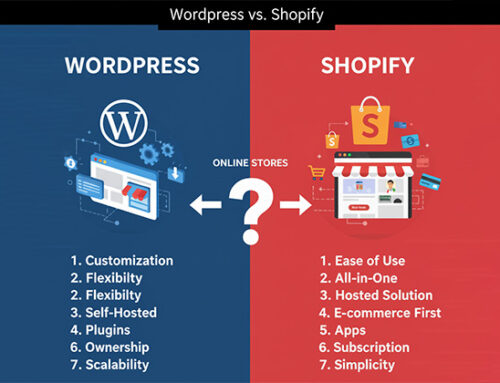
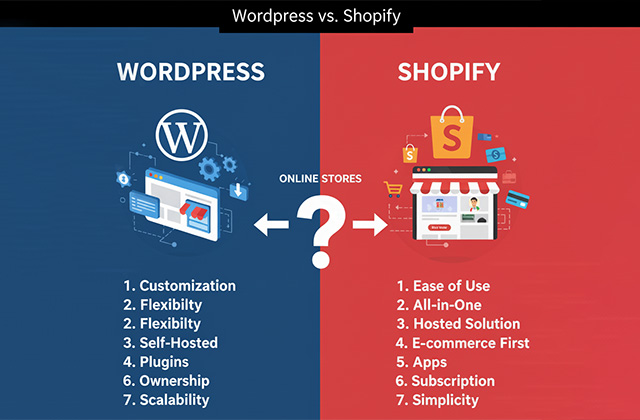
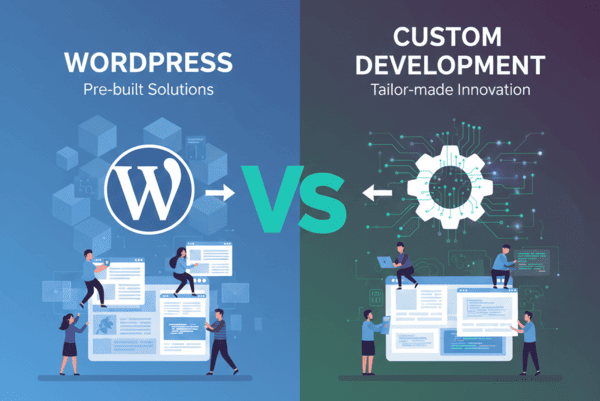
WordPress vs Custom: A Real-World Comparison
1. Cost
-
WordPress: Lower initial cost
-
Custom: Higher upfront investment
However, custom development can reduce long-term maintenance costs for complex systems.
2. Development Time
-
WordPress: Faster launch
-
Custom: Longer development cycle
If you need to go live quickly, WordPress often wins.
3. Scalability
-
WordPress: Scales well with proper planning
-
Custom: Unlimited scalability
For fast-growing businesses, planning scalability early is crucial.
4. Maintenance
-
WordPress: Regular updates required
-
Custom: Controlled updates, fewer dependencies
Both require maintenance — just in different ways.
5. SEO & Performance
-
WordPress: Excellent SEO when optimized properly
-
Custom: Maximum control over performance
Speed and SEO depend more on how the site is built, not the platform itself.
The Biggest Mistake I See Businesses Make
Many businesses choose a platform based on:
-
What’s popular
-
What’s cheapest
-
What someone else used
Instead, the platform should be chosen based on:
-
Business goals
-
Expected traffic
-
Feature complexity
-
Budget over the next 3–5 years
I’ve worked with clients who started on WordPress and later moved to custom solutions — and others who saved money by not choosing custom development unnecessarily.
My Honest Recommendation After 15 Years
-
Choose WordPress if you want flexibility, faster development, and cost efficiency.
-
Choose Custom Development if your website is central to your business operations and requires advanced functionality.
The smartest approach is not choosing a platform — it’s choosing the right architecture from the start.
Not sure what’s right for your business?
I offer honest, platform-agnostic guidance based on real experience — not sales pressure.
Request a free consultation and get clear answers before you invest.